Sage in Witchcraft
A venerated kitchen and ritual botanical for deep spatial purification, intellectual discernment, domestic longevity, and clearing stale stagnation.
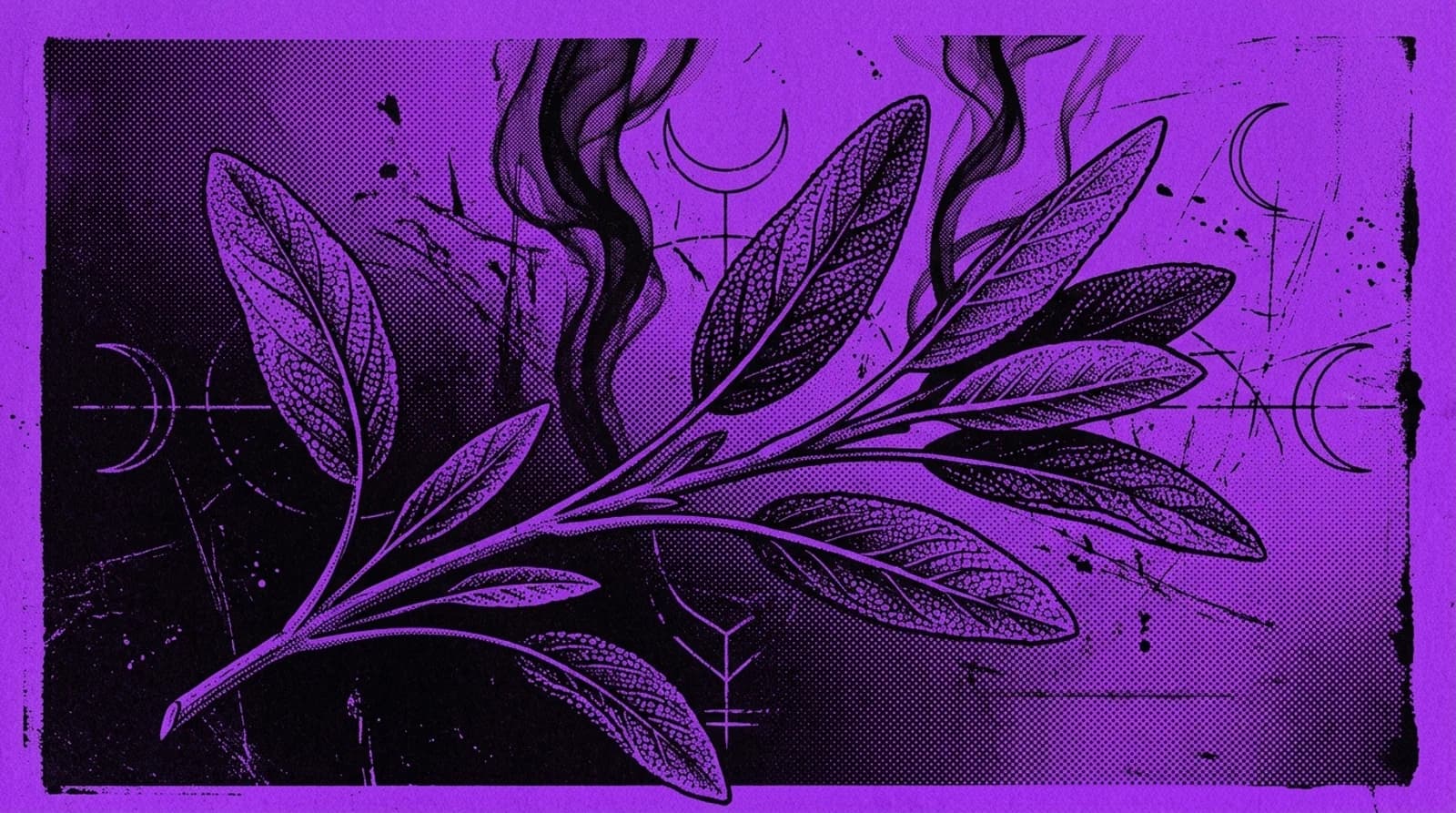
Quick Answer: What is Sage used for in witchcraft?
In witchcraft, common garden sage (Salvia officinalis) is used for space cleansing, intellectual clarity, long-term wisdom, and clearing stale emotional stagnation. Renowned throughout European folk tradition as a botanical of longevity and mental fortitude, garden sage serves as an accessible, sustainable, and culturally respectful alternative to overharvested white sage for smoke cleansing and threshold warding.
Sage Magical Correspondences
| Primary Associations | Deep spatial clearing, intellectual wisdom, domestic longevity, dispelling grief & stagnation, emotional reset |
|---|---|
| Intentions | Clearing post-illness stagnation, sharp decision-making, ancestral memory, protective home warding |
| Classical Element | Air (clarifying smoke, intellectual expansion) / Earth (woody resilience, grounding longevity) |
| Planetary Ruler | Jupiter (expansion of wisdom, longevity, philosophical perspective, benevolence) |
| Common Forms | Dried leaf bundles, fresh garden leaves, steeped floor wash, simmer pots, dried culinary flakes |
| Common Pairings | Rosemary (solar defense & memory), Thyme (courage through grief), Coarse Salt (containment threshold barrier), Black Candle (severance & space clearing) |
| Folk Names | Garden Sage, Common Sage, Broadleaf Sage, Herb of Immortality, Salvia |
* Note: Elemental and planetary correspondences reflect historical grimoires, occult traditions, and folk herbals. Exact attributions vary across lineages, sources, and individual practices and are not universally standardized.
Spiritual Meaning & Occult History of Sage
Sage's spiritual identity is inseparable from the concept of wisdom earned through living. Unlike herbs of impetuous passion or fleeting luck, sage represents the long view: patience, intellectual maturity, and the dignified courage to face reality as it is.
In historical folk magic, sage was known as the 'herb of elders.' It was believed that planting sage in one's garden invited ancestral blessings and helped householders make decisions that would withstand the test of decades rather than weeks.
Witchr emphasizes common culinary garden sage (*Salvia officinalis*). It is easily grown in window boxes or purchased in grocery markets, completely sustainable, and free from the ethical concerns surrounding endangered wild white sage.
Magical Properties of Sage
In ritual witchcraft, garden sage functions through three primary magical properties: energetic purging, intellectual illumination, and grief transmutation.
**Energetic Purging & De-Stagnation:** The pungent, camphor-rich smoke of garden sage acts like a stiff broom across psychic cobwebs. It sweeps away heavy emotional residue, lingering viral fatigue, and the psychic grime that accumulates in unventilated rooms.
**Jupiterian Illumination:** Ruled in Western astrology by Jupiter, sage is traditionally associated with rising above petty grievances and short-term alarm. It provides a sense of cognitive detachment, helping practitioners evaluate difficult decisions with strategic calm and philosophical grace.
**Transmuting Grief & Loss:** When a home has experienced severe loss, heartbreak, or burnout, sage provides dignified comfort. It clears the heavy paralysis of sorrow while preserving the sacred honor of remembrance.
Core Witchcraft Uses & Intentions
Practitioners adapt garden sage across four core practical witchcraft applications:
1. Deep Space Cleansing & Energetic Purging
Burning a bundle of dried garden sage leaves is the premier method for clearing rooms after intense arguments, illness, or moving into a new apartment.
For a smoke-free alternative, steep dried sage with lemon rind and coarse salt in simmering water, cooling it to wash baseboards and doors.
2. Strategic Decision-Making & Clarity
When paralyzed between multiple life paths or overwhelmed by business negotiations, inhaling crushed dried sage leaves centers your focus on long-term sustainability rather than immediate fear.
3. Processing Grief & Bereavement
Sage is traditionally used to support practitioners moving through seasons of deep sorrow or transition. Burning sage alongside a white candle marks an intentional transition toward quiet acceptance.
4. Domestic Longevity & Household Harmony
Keeping a living potted sage plant on a sunny kitchen windowsill serves as a traditional talisman of family resilience and domestic peace.
Simple Ways Practitioners Work with Sage Today
Here are five grounded, everyday ways to incorporate common garden sage into your practice:
**1. Sustainable Single-Leaf Smolder:** You do not need a giant smudge stick. Simply light a single dried garden sage leaf over a ceramic dish, blow out the flame, and walk the curl of smoke through your workspace to reset attention.
**2. The Threshold Reset Wash:** Steep four fresh or dried sage leaves in boiling water with a tablespoon of salt. Once cooled, wipe your front doorknob, threshold, and desk surface clean.
**3. The Decision-Making Focus Leaf:** Place a dried sage leaf between the pages of your journal where you are mapping out an important dilemma. Let its crisp aroma ground your thoughts.
**4. Simmer Pot for Heavy Homes:** Combine garden sage sprigs, rosemary, and lemon peels in a pot of water on low heat to clear dense winter air without smoke.
**5. Altar Tool Consecration:** Pass ritual instruments, tarot decks, or writing pens through sage smoke to dedicate them to truthful, unclouded work.
Magical Pairings with Sage
Combines Jupiter's wise spatial clearing with solar perimeter defense, creating an impermeable shield against stagnant energy.
Blends wisdom with warrior courage, supporting practitioners who must navigate high-stakes confrontation or deep grief.
Anchors sage's purifying smoke into physical mineral containment, sealing boundaries along floorboards and doorways.
Burned together during room banishings to absorb heavy residual grief while sage elevates the spiritual baseline.
Pairs solar manifestation with long-term wisdom, ensuring that goals are pursued with integrity and foresight.
The Single-Leaf Decision Clarifier
Light a single dried garden sage leaf over a fireproof dish and blow out the flame so it smolders. As the fragrant smoke rises, take three deep breaths, state the dilemma you are facing, and declare: 'I choose clarity over impulse; I choose the path that preserves my peace.'
Frequently Asked Questions
What is common sage used for in witchcraft?
Common garden sage is used for space cleansing, intellectual clarity, ancestral wisdom, and dispelling stagnant emotional residue. It is an all-around purifying botanical that restores dignity and freshness to homes and workspaces.
Is it ethical to burn garden sage for smoke cleansing?
Yes. Common culinary garden sage (Salvia officinalis) has a long-documented history across European and Mediterranean folk customs and regional kitchens. It is widely cultivated, ecologically sustainable, and free from the cultural concerns associated with wild-harvested white sage.
What is the difference between garden sage and white sage?
Garden sage (Salvia officinalis) is a culinary and medicinal plant native to the Mediterranean with broad green leaves and rich European folk roots. White sage (Salvia apiana) is a distinct species native to the desert Southwest and Baja California, traditionally sacred to Indigenous nations and currently threatened by wild poaching. Witchr encourages working with garden sage.
Can you use kitchen sage from the grocery store in magic?
Yes. Culinary sage flakes or fresh bundles from your grocery store or garden carry the exact same volatile oils and botanical correspondences as specialty occult herbs. Witchcraft relies on the plant itself, not expensive packaging.
What element and planetary ruler govern sage?
In traditional occult systems, sage is most often ruled by the planet Jupiter and the element of Air (with some traditions attributing it to Earth). Correspondence attributions vary across historical grimoires and lineages, reflecting different symbolic frameworks.
How do you clear a room with sage without overwhelming smoke?
Rather than burning a large bundle, ignite just one or two loose dried leaves in a ceramic bowl. Alternatively, create a smoke-free simmer pot by gently heating sage leaves, lemon peel, and water on your stovetop.
Practical Safety & Botanical Context
- ·Thujone Content Precaution: Concentrated sage essential oil contains thujone, which can be neurotoxic in excessive doses. Never ingest pure sage oil or consume high-potency medicinal sage infusions during pregnancy or lactation.
- ·Room Ventilation Requirement: Always open at least one window when smoke cleansing with sage. Proper airflow allows physical smoke particulates and stagnant emotional frequencies to exit the building.
- ·Pet Respiratory Safety: Never burn sage in enclosed rooms with pets, especially birds, cats, and dogs whose respiratory systems are highly sensitive to particulate smoke. Use water washes or simmer pots around animals.
- ·Fire Caution: Dried sage leaves can smolder slowly for longer than expected. Always extinguish bundles thoroughly in sand or against a ceramic dish before leaving the room.
Related Practices & Rituals
New Beginning Ritual
The lease is signed, the job is quit, or the calendar page turned, but your spirit is lagging behind.
Leave Me the Fuck Alone Protection Ritual
When someone’s constant noise, entitlement, or lingering presence is taking up space in your chest.
Pick a Damn Direction Ritual
Paralyzed between two options, stuck in endless pros-and-cons lists, wasting weeks in limbo.
Historical Sources & References
- · Gerard, John. The Herball or Generall Historie of Plantes (1597).
- · Culpeper, Nicholas. The English Physician (1652).
- · Grieve, Maud. A Modern Herbal (1931).
- · Agrippa, Heinrich Cornelius. Three Books of Occult Philosophy (1533).