Mugwort in Witchcraft
A traditional lunar botanical renowned for vivid dream recall, tarot and scrying facilitation, liminal threshold defense, and journeying between worlds.
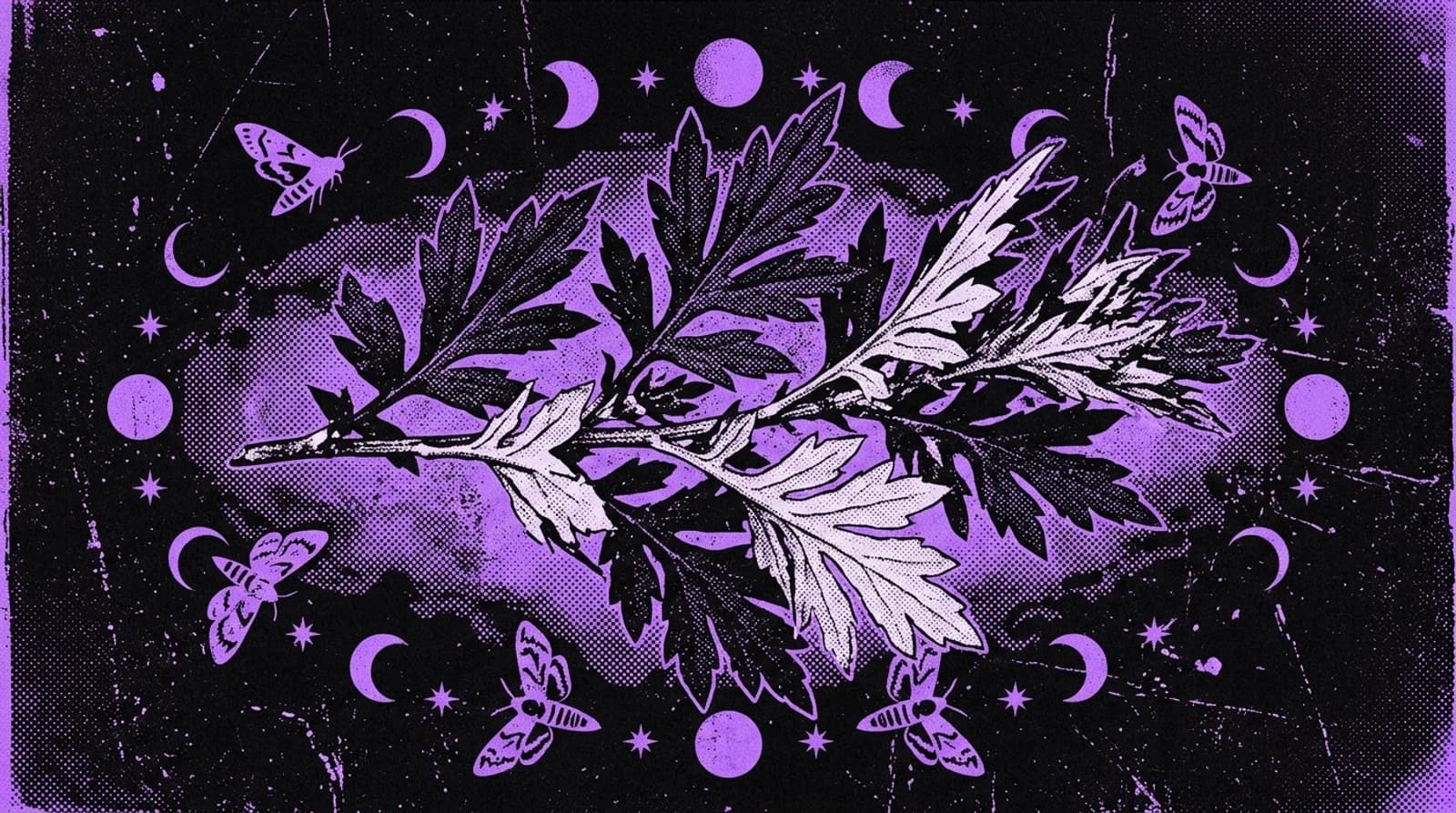
Quick Answer: What is Mugwort used for in witchcraft?
In witchcraft, mugwort (Artemisia vulgaris) is the quintessential herb of oneiric magic, lucid dreaming, psychic protection, and intuitive divination. Ruled by the Moon and named after Artemis, the Greek goddess of the wilderness and transition, mugwort thins the veil between waking consciousness and the deep subconscious. Practitioners use it in dream pillows, cleansing smoke for tarot decks, and threshold washes to guard against psychic fatigue during liminal life transitions.
Mugwort Magical Correspondences
| Primary Associations | Lucid dreaming & dream recall, tarot/scrying divination, liminal protection, astral travel, uncrossing |
|---|---|
| Intentions | Enhancing intuition, nocturnal insights, cleansing divination tools, traveler protection, boundary crossing |
| Classical Element | Earth / Water (deep root grounding, lunar tides, somatic intuitive connection) |
| Planetary Ruler | Moon (subconscious, dreams, night, reflection, liminal thresholds) |
| Common Forms | Dried herb bundles for gentle smoke, dream pillow sachets, external washes, smudge blends, altar bowls |
| Common Pairings | Amethyst (contemplative clarity), Lavender (soothing dream intensity), Chamomile (peaceful sleep induction), Pentagram (grounding containment), Black Candle (shadow work & scrying) |
| Folk Names | Sailor's Tobacco, Felon Herb, Artemisia, St. John's Plant, Old Uncle Henry, Cingulum Sancti Johannis |
* Note: Elemental and planetary correspondences reflect historical grimoires, occult traditions, and folk herbals. Exact attributions vary across lineages, sources, and individual practices and are not universally standardized.
Spiritual Meaning & Occult History of Mugwort
Mugwort embodies the liminal archetype: the sacred space between waking and sleeping, physical earth and astral intuition, certainty and mystery. It is not an herb that delivers neat, polite answers; it is an herb that opens the cellar doors of the unconscious mind.
In historical folklore, mugwort's silvery leaf undersides were compared to moonlight illuminating a dark path. Because the plant flourishes in disturbed roadside soils, waste grounds, and hedge lines, European cunning folk viewed it as a natural dweller of boundaries and crossroads.
In contemporary occult practice, mugwort reminds practitioners that psychic perception is not a supernatural miracle, but an innate human faculty of pattern recognition and deep listening that requires quietude to emerge.
Magical Properties of Mugwort
Mugwort operates across three central occult mechanisms: oneiric lucidity, psychic shielding, and liminal threshold protection.
**Oneiric Lucidity & Symbolic Dreams:** Traditionally associated with the dreaming mind, mugwort's pungent aromatics have long made it a favorite bedside sachet. In folk practice, it is used to support dream recall and help practitioners process subconscious imagery with calm discernment.
**Divinatory Consecration:** Passing divination instruments through mugwort smoke removes past conversational baggage and sharpens the practitioner's symbolic perception during tarot or rune readings.
**Liminal Threshold Defense:** Because mugwort thrives on borders, it forms an impermeable energetic boundary against psychic exhaustion during major life transitions—such as career shifts, moves, or mourning.
Core Witchcraft Uses & Intentions
Practitioners adapt mugwort across four primary ritual disciplines:
1. Lucid Dreaming & Nighttime Vision Work
Tucking a sachet of dried mugwort under your pillow is the traditional folk practice for dream recall. It turns sleep into a laboratory for problem-solving and emotional processing.
If dreams become excessively vivid or disorienting, combine mugwort with lavender to soften the intensity.
2. Consecrating Tarot Cards & Divination Tools
Smoldering a small pinch of dried mugwort in a ceramic shell or dish and wafting the smoke through your card deck cleanses previous reading dynamics and tunes your intuition to subtle patterns.
3. Safe Passage & Threshold Navigation
Carrying a small pouch of dried mugwort when traveling through crowded transit hubs or embarking on long road trips acts as a classic folk ward against spatial fatigue and disorientation.
4. Grounding Shadow Work & Introspection
During periods of difficult psychological self-reflection, keeping mugwort on your altar alongside a black candle creates a brave container to inspect hidden fears without flinching.
Simple Ways Practitioners Work with Mugwort Today
Here are five grounded methods to integrate mugwort into your practice:
**1. The Bedside Dream Sachet:** Combine equal parts dried mugwort and lavender in a breathable cotton pouch. Tuck it inside your pillowcase and keep a notebook on your bedside table.
**2. Divination Tool Smoke Pass:** Light a small sprig of dried mugwort over a fireproof dish, blow out the flame, and pass your tarot deck through the rising smoke three times before an in-depth reading.
**3. The Liminal Foot Soak:** Steep a handful of dried mugwort in hot water with coarse salt. Allow it to cool to a comfortable temperature for a grounding ten-minute foot soak after exhausting social interactions.
**4. Altar Intuition Offering:** Keep a small ceramic bowl of dried mugwort leaves beside your journal or divination cards as an honoring of unconscious wisdom.
**5. The Traveler's Pocket Charm:** Place a whole dried mugwort leaf inside your shoe or backpack pocket before embarking on an unfamiliar journey for grounded stamina.
Magical Pairings with Mugwort
Essential balancing companion: softens mugwort's intense dream symbolism with soothing emotional calm to encourage restful sleep.
Adds gentle solar warmth and emotional soothing to mugwort's deep lunar introspection, encouraging peaceful rest.
Provides geometric and elemental grounding, keeping the practitioner fully contained while navigating astral or psychic work.
Burned together during scrying and shadow work to absorb fears and illusions while mugwort opens truthful perception.
Combines solar intellectual memory with lunar dream recall, helping you remember and integrate night insights into waking life.
Combines mugwort's lunar dream introspection with crystalline clarity and spiritual composure, steadying the mind during divination and dream journaling.
The Divination Tool Smoke Pass
Light a dried pinch of mugwort in a fireproof dish and blow out the flame. Pass your favorite tarot deck or journal through the cool rising smoke three times, stating: 'Clear the past impressions; open my eyes to what is true.'
Frequently Asked Questions
What is mugwort used for in witchcraft?
In witchcraft, mugwort is primarily used for enhancing lucid dreaming, dream recall, consecrating divination tools like tarot cards, and guarding against psychic exhaustion during liminal life transitions. It is the premier lunar botanical for accessing the subconscious.
Does mugwort actually make dreams more vivid?
Yes. Many practitioners and herbalists report that mugwort significantly increases the visual detail, emotional intensity, and narrative recall of dreams. Its volatile aromatic compounds gently stimulate hypnagogic and REM brain states when placed in bedside sachets.
Is mugwort safe to drink as tea?
While culinary and medicinal tea is used in some herbal traditions, mugwort contains bitter principles and thujone. It has a strong, bitter medicinal taste and must strictly be avoided by anyone who is pregnant or nursing. Most modern witches prefer using it externally in dream sachets, washes, or incense rather than drinking it.
Who should NEVER use mugwort?
Mugwort must NEVER be used by pregnant or breastfeeding individuals, as it is a documented emmenagogue that stimulates uterine circulation and can cause contractions. People with known allergies to the Asteraceae/Compositae family (ragweed, daisies) should also avoid direct contact.
How do you use mugwort for tarot and divination?
Light a dried sprig over a heatproof dish, blow out the flame to create a steady curl of aromatic smoke, and gently pass your card deck, runes, or scrying mirror through the smoke while setting an intention for unclouded insight and truthful interpretation.
Can you burn mugwort like sage?
Yes. Mugwort stems can be bundled and dried for smoke cleansing. It produces a sweet, herbaceous, sage-like smoke that is gentler than white sage and carries strong traditional European folk roots.
Practical Safety & Botanical Context
- ·CRITICAL PREGNANCY & LACTATION CONTRAINDICATION: Mugwort contains thujone and is a well-documented uterine stimulant and emmenagogue. It must NEVER be ingested, applied, or heavily inhaled by pregnant or nursing individuals under any circumstances.
- ·Asteraceae Allergy Warning: Mugwort belongs to the daisy and ragweed family (Asteraceae). Individuals with seasonal allergies to ragweed or mugwort pollen can experience contact dermatitis, eye irritation, or asthma symptoms upon contact.
- ·Vivid Nightmare Precautions: Mugwort can occasionally induce dreams so vivid they feel disorienting or frightening. If sleep becomes restless or distressing, immediately remove the sachet from your pillow and place it outside the bedroom.
- ·Pet Safety: Keep dried mugwort and essential oils safely out of reach of household pets. Never diffuse concentrated mugwort oil around cats or dogs.
Related Practices & Rituals
Pick a Damn Direction Ritual
Paralyzed between two options, stuck in endless pros-and-cons lists, wasting weeks in limbo.
Leave Me the Fuck Alone Protection Ritual
When someone’s constant noise, entitlement, or lingering presence is taking up space in your chest.
New Beginning Ritual
The lease is signed, the job is quit, or the calendar page turned, but your spirit is lagging behind.
Historical Sources & References
- · The Lacnunga (Anglo-Saxon Medical Text, 10th c. CE).
- · Culpeper, Nicholas. The English Physician (1652).
- · Grieve, Maud. A Modern Herbal (1931).
- · Cunningham, Scott. Cunningham's Encyclopedia of Magical Herbs (1985).